Article: Can Saunas Help You Live Longer? What Science Says About Heat, Heart Health & Longevity
Can Saunas Help You Live Longer? What Science Says About Heat, Heart Health & Longevity
Saunas have been used for centuries as a place to relax, warm the body, and recover. But modern research is asking a much bigger question:
Could regular sauna use actually support a longer, healthier life?
A TED-Ed lesson, Can Saunas Make You Live Longer? by science journalist Max G. Levy, explores the science behind sauna bathing and why researchers are increasingly interested in the relationship between heat exposure, cardiovascular health, recovery, and longevity.
The answer isn't as simple as saying that a sauna makes you live longer. But the research behind regular sauna bathing is fascinating.
What Happens to Your Body in a Sauna?
When you sit in a sauna, your body immediately begins adapting to the heat.
Blood vessels near the skin widen, circulation increases, your heart rate rises, and your body begins sweating to regulate its temperature.
Interestingly, some of these cardiovascular responses resemble what happens during moderate physical activity.
Your heart is working harder to circulate blood while your blood vessels respond to the increased heat.
This is one reason researchers are studying sauna bathing as a form of passive heat therapy.
It doesn't replace exercise—but it may complement an active, healthy lifestyle.
The Finnish Sauna Study That Got Researchers' Attention
One of the most discussed studies on sauna and longevity followed 2,315 middle-aged men in Eastern Finland.
Researchers tracked participants for a median of more than 20 years and compared their sauna habits with cardiovascular and mortality outcomes.
The study found an association between more frequent sauna bathing and lower rates of sudden cardiac death, fatal cardiovascular disease, and all-cause mortality.
Importantly, this was an observational study.
That means the research found an association, not proof that sauna use directly caused people to live longer. Lifestyle, genetics, physical activity, diet, social connection, and other factors may also contribute to the results.
Still, the findings helped spark greater scientific interest in regular heat exposure and cardiovascular wellness.
Why Might Sauna Heat Support Cardiovascular Wellness?
During heat exposure, blood vessels dilate and circulation to the skin increases.
Your heart rate also rises as your cardiovascular system works to move blood through the body and help regulate temperature.
Over time, researchers have proposed several mechanisms that could help explain the cardiovascular associations observed with sauna bathing, including changes related to vascular function, arterial stiffness, blood pressure, and autonomic nervous system activity.
This doesn't mean sitting in a sauna is the same as going for a run.
Think of sauna as a potential complement to movement—not a substitute for it.
A balanced wellness routine still includes regular physical activity, nutritious food, sufficient sleep, hydration, stress management, and appropriate medical care.
Heat, Recovery and the Body's Stress Response
Heat itself is a form of physiological stress.
That sounds negative, but the body is designed to adapt to manageable amounts of stress.
When exposed to elevated temperatures, cells activate protective responses, including proteins commonly known as heat shock proteins.
These proteins are involved in maintaining and protecting cellular proteins when cells experience stressful conditions.
Researchers continue to investigate whether repeated heat exposure and these adaptive mechanisms may contribute to some of the longer-term health associations observed with sauna bathing.
Can Sauna Support Post-Workout Recovery?
There's another reason athletes and fitness enthusiasts often incorporate sauna sessions into their routines: recovery and relaxation.
Heat increases blood flow and can create a relaxing environment after physical activity. For many people, stepping into a sauna after exercise becomes a transition between training and rest.
A home sauna also provides something increasingly valuable in modern life: intentional downtime.
No workout.
No notifications.
No rushing.
Just warmth, recovery, and a few quiet minutes to reset.
What About Infrared Saunas?
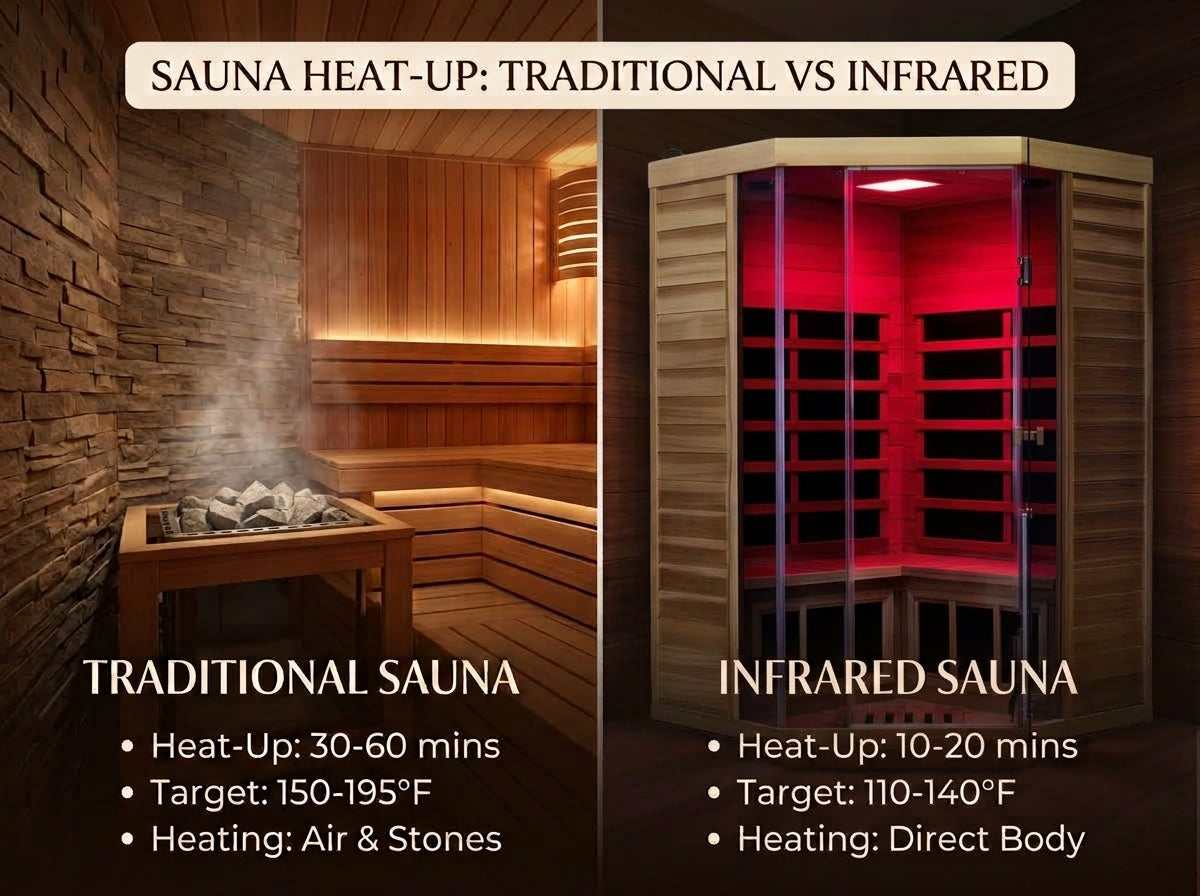
Traditional Finnish saunas typically heat the surrounding air to relatively high temperatures.
Infrared saunas work differently.
Infrared heaters use infrared energy to deliver heat while generally operating at lower air temperatures than traditional Finnish saunas.
For some users, this can create a more comfortable environment for longer, relaxing sessions.
However, there's an important distinction when discussing longevity research.
Much of the well-known long-term research—including the Finnish study discussed above—was conducted around traditional Finnish sauna bathing.
Research specifically examining infrared sauna technology continues to develop, so the results from traditional sauna studies should not automatically be treated as proof of identical benefits from infrared saunas.
So, Can Sauna Really Help You Live Longer?
Science doesn't currently allow us to say that sauna use will make an individual live longer.
What researchers have found is more nuanced—and arguably more interesting.
Regular sauna bathing has been associated with favorable cardiovascular and longevity outcomes in certain populations, while controlled heat exposure creates measurable physiological responses involving circulation, heart rate, sweating, and thermoregulation.
A review published in Mayo Clinic Proceedings also concluded that emerging evidence connects sauna bathing with several potential cardiovascular and other health benefits, while emphasizing that additional research is needed.
The bigger takeaway isn't to chase a longevity shortcut.
It's to think about sauna as one component of a sustainable wellness routine.
Creating a Sauna Wellness Ritual at Home
One of the advantages of owning a home infrared sauna is convenience.
Instead of turning sauna bathing into an occasional spa experience, you can create a consistent wellness ritual around your existing lifestyle.
A simple routine might look like:
Move → Hydrate → Sauna → Cool Down → Rest
Consistency matters more than trying to tolerate extreme heat or exceptionally long sessions.
Listen to your body, stay hydrated, and leave the sauna if you feel dizzy, weak, nauseated, or uncomfortable.
People who are pregnant or who have cardiovascular conditions, blood-pressure concerns, kidney conditions, or other medical issues should speak with a qualified healthcare professional before beginning a sauna or heat-therapy routine.
The Wizzisauna Approach to At-Home Wellness
At Wizzisauna, we believe wellness works best when it fits naturally into everyday life.
Our infrared saunas are designed to bring the sauna experience into the home, creating a dedicated space for warmth, relaxation, recovery, and personal wellness.
Whether you're stepping inside after a workout, unwinding at the end of a long day, or building a more intentional self-care routine, a home infrared sauna makes it easier to turn occasional relaxation into a consistent ritual.
Because wellness isn't always about doing more.
Sometimes it's about creating the space to slow down, recover, and take care of your body.
Frequently Asked Questions
Can sauna use help you live longer?
Research has found an association between frequent traditional Finnish sauna bathing and lower cardiovascular and all-cause mortality in a population of middle-aged Finnish men. However, observational research cannot prove that sauna use itself causes a longer lifespan.
Is sauna good for cardiovascular health?
Heat exposure causes blood vessels to dilate, increases skin blood flow, and raises heart rate. Research has associated regular sauna bathing with several favorable cardiovascular outcomes, although sauna should not replace exercise or medical treatment.
Is an infrared sauna the same as a traditional sauna?
No. Traditional saunas primarily heat the surrounding air, while infrared saunas use infrared energy to provide heat and generally operate at lower ambient temperatures. Much of the major long-term sauna research has studied traditional Finnish sauna bathing.
Does sauna replace exercise?
No. Although sauna heat can produce some cardiovascular responses that resemble physical activity, it does not provide the muscular, metabolic, strength, mobility, and cardiovascular benefits of exercise.
Is it safe to use an infrared sauna every day?
Heat tolerance varies from person to person. Sauna frequency, temperature, and session duration should be appropriate for the individual. Stay hydrated and stop immediately if you feel unwell. People with medical conditions or who are pregnant should consult a healthcare professional about sauna use.
Final Thought
The science of sauna and longevity is still evolving.
What we know today is that heat exposure produces meaningful physiological responses, and regular sauna bathing has been associated with encouraging cardiovascular and long-term health outcomes in observational research.
The goal shouldn't be to find a miracle shortcut to longevity.
Instead, sauna can be viewed as part of something much bigger:
Move regularly. Recover intentionally. Sleep well. Manage stress. Stay connected. And create wellness habits you can actually maintain.
That may be where the real value of the sauna ritual begins.
This article is for educational purposes only and is not intended as medical advice, diagnosis, or treatment.

Written by Katherine Millet